
Designing a Luxury Texas Hill Country Home: 4 Common Questions Answered
Designing a custom home in the Texas Hill Country comes with an extraordinary advantage: much of the inspiration is already there. Limestone bluffs, rolling hills, live oaks and wide-open views give a home a natural sense of place before the first piece of furniture arrives.
The challenge is creating interiors that live up to that setting while still working beautifully for everyday life. A home may need to feel polished enough for entertaining one evening and comfortable enough for family, dogs, and wet feet from the pool the next afternoon.
When planning Texas Hill Country interiors, some of the same questions tend to come up again and again. How do you make a large open floor plan feel intimate? Which materials can stand up to the realities of Hill Country living? How do you embrace contemporary architecture without creating rooms that feel cold? And with so much natural beauty outside, how do you choose colors that complement the landscape without making the entire house feel overly themed?
Here are four questions I hear often, along with some of the things I consider when designing a Hill Country home.
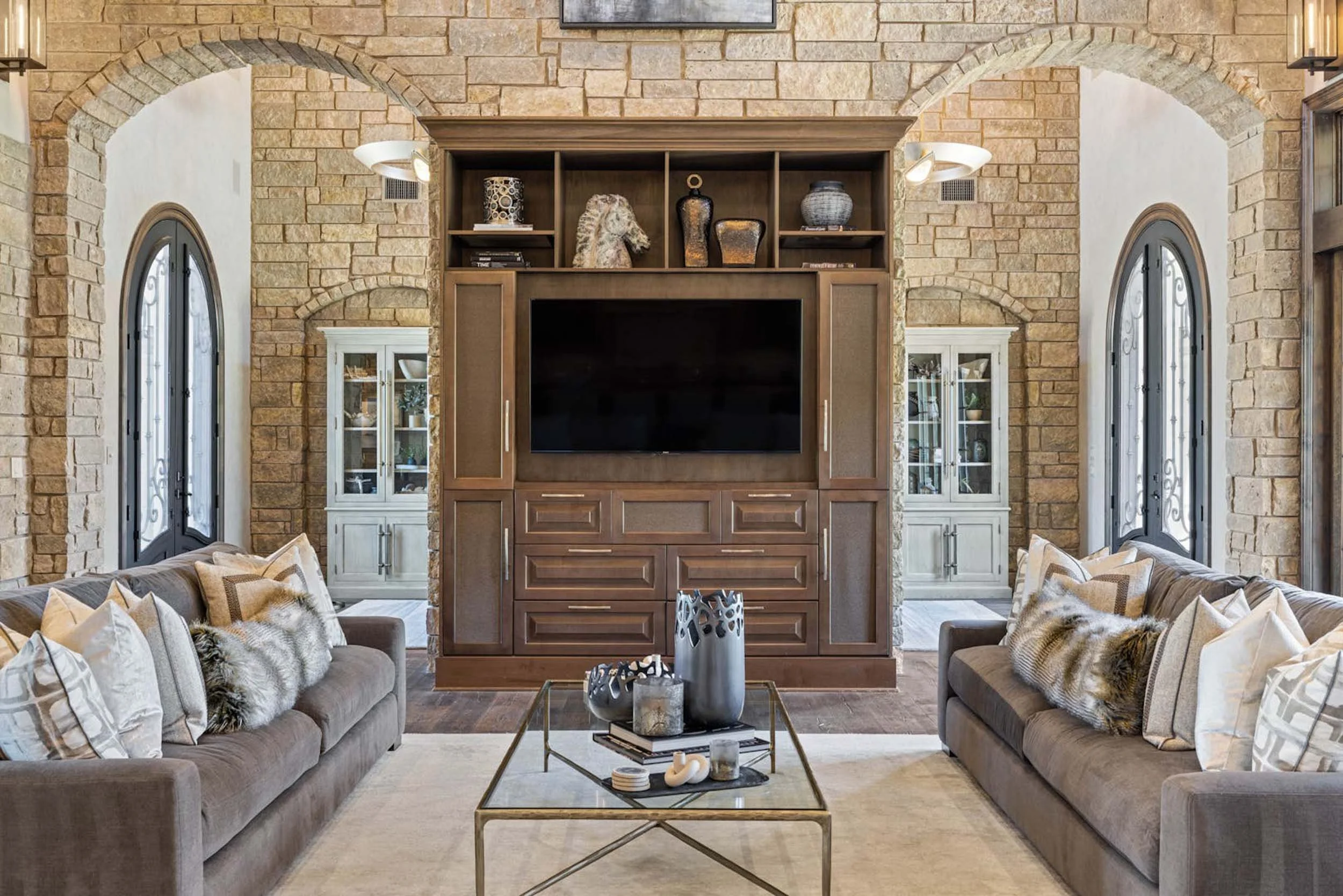
How do I zone a large, open-concept layout in Texas Hill Country contemporary homes?

One of the great pleasures of Hill Country contemporary homes is their openness. High ceilings, expansive windows and connected kitchen, dining and living spaces allow the architecture to take full advantage of the surrounding views. They are also wonderfully suited to the way people entertain today, when guests tend to move freely between the kitchen, living room and outdoors.
The trick is giving those large spaces definition without losing the openness that made them appealing in the first place.
I often start by looking up. In a large open room, the ceiling can do some of the work that walls once did. Timber beams, a change in ceiling treatment or warm wood paneling can give a dining area or kitchen its own sense of place while preserving long sightlines through the home.
Furniture placement is just as important. A generously sized sectional can anchor a living area, while a console, pair of chairs or properly scaled rug helps establish its boundaries. A double-sided fireplace can be especially effective, creating a natural division between two spaces while allowing them to remain visually connected.
For homeowners who entertain frequently, it is also worth considering how open you really want the house to be at every moment. Pocketing glass doors can provide flexibility between indoor and outdoor spaces, while a secondary prep kitchen or butler’s pantry allows the main kitchen to remain part of the gathering space without putting every bit of dinner preparation on display.
The goal isn’t to divide an open floor plan into a collection of smaller rooms. It is to create enough visual cues that each area feels comfortable, purposeful and connected to the next.
What flooring and fabrics work best with kids, dogs and plenty of guests?
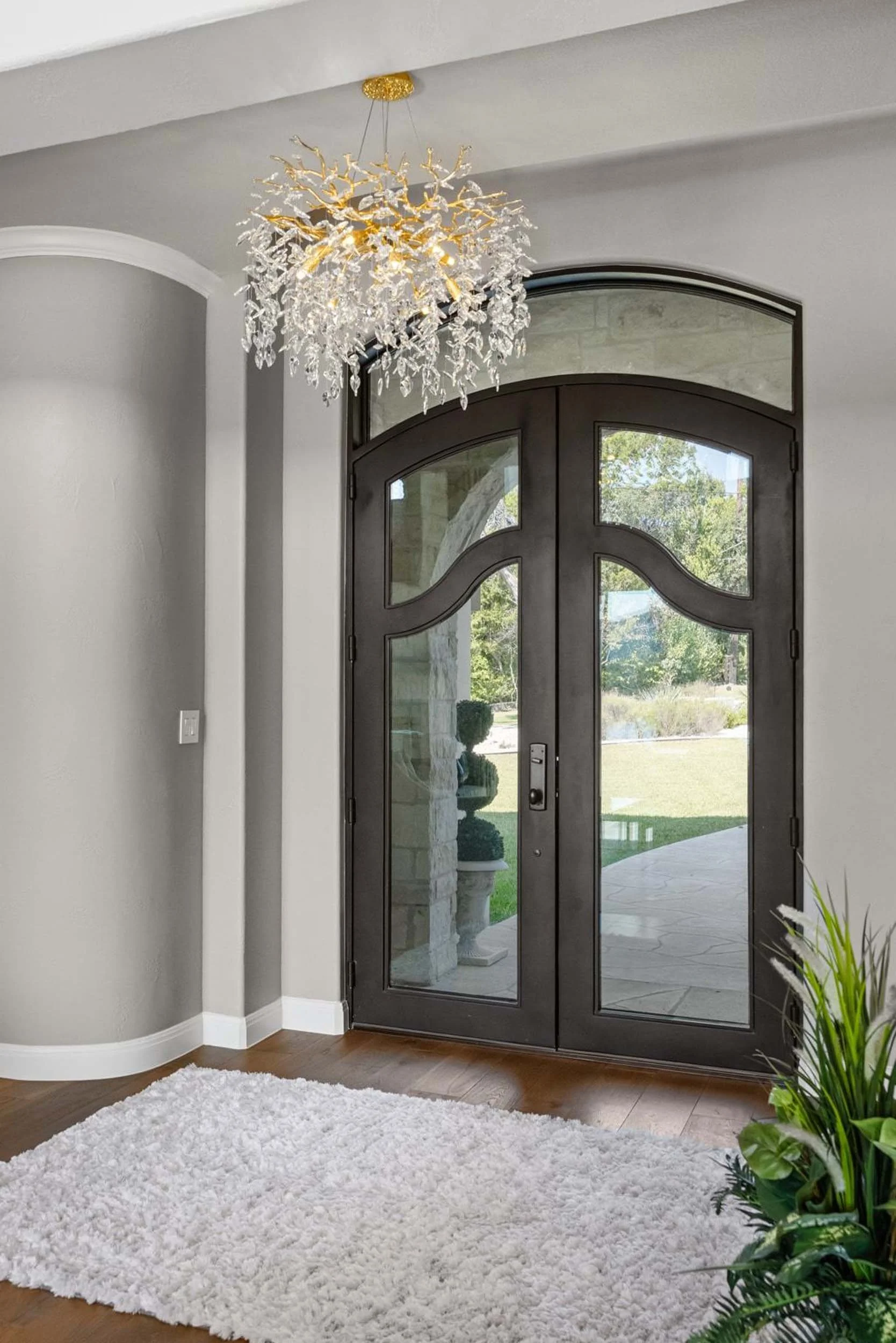
Indoor-outdoor living is one of the joys of Texas Hill Country homes, but it also means the materials inside need to work a little harder. Depending on the property, that might mean limestone dust, red clay, pool water, hard well water, pets and a steady stream of people moving between indoors and out.
Fortunately, durability no longer requires choosing materials that look overtly practical.
For wood flooring, I love a wire-brushed oak with a soft matte finish because the natural grain and texture are more forgiving of fine dust and everyday scratches than a highly polished surface. In entryways, mudrooms, pool-adjacent spaces and back porches, sealed stone or polished concrete can handle wet feet and heavy traffic while still feeling completely at home in the architecture.
This is also a good place to think about continuity. Repeating or complementing an exterior stone inside the home can make the transition between indoors and outdoors feel more natural, particularly when large glass doors allow the two spaces to be seen together. In a Hill Country home, that connection to the landscape can be one of the most beautiful parts of the design.
Upholstery has changed enormously, too. Today’s high-performance fabrics can offer the texture and softness of linen, velvet or chenille while being far easier to clean and maintain. They are particularly useful on the pieces that get the most use: family-room sofas, dining chairs, counter stools and upholstered beds.
This is one area where I encourage clients to be candid with me about how they actually live. If you have children, three dogs or a house that fills up with family every holiday, those aren’t obstacles to good design; they’re information that helps me make better choices. A beautiful home should be able to handle people actually living in it.
How do I create modern Texas Hill Country interiors without making them feel cold?
Contemporary architecture feels right at home in Texas Hill Country. Clean lines and large expanses of glass create a striking contrast with the rugged landscape outside, and the simplicity of the architecture allows those views to become part of the interior.
But when every surface is smooth, hard and highly finished, contemporary can quickly begin to feel a little too pristine. Warm Texas Hill Country interiors rely on balance, pairing those cleaner architectural elements with materials that have texture, depth and natural variation.
If a room has crisp plaster walls and black steel windows, for example, a native limestone fireplace can immediately introduce warmth and character. Wood ceilings or beams can soften high ceilings, while hand-finished cabinetry, natural fibers and textured stone keep a contemporary palette from feeling flat.
Soft furnishings matter just as much. Wool rugs, linen drapery, upholstered seating and rounded furniture introduce softness against harder architectural lines. Scale is important here as well. Rooms with soaring ceilings and oversized windows need furniture with enough presence to feel grounded rather than lost within the architecture.
Lighting is another part of the equation that is easy to underestimate. Rather than relying solely on recessed lighting, I like to create layers with sconces, pendants, lamps and architectural lighting. It gives a room flexibility throughout the day and can make even a very large space feel warmer and more intimate in the evening.
And not everything has to be new. I love bringing an antique chest, an inherited piece or something collected on a trip into a contemporary room. Against clean architecture, those pieces often become even more interesting, and they give a home the sense that it has evolved rather than simply been installed all at once.
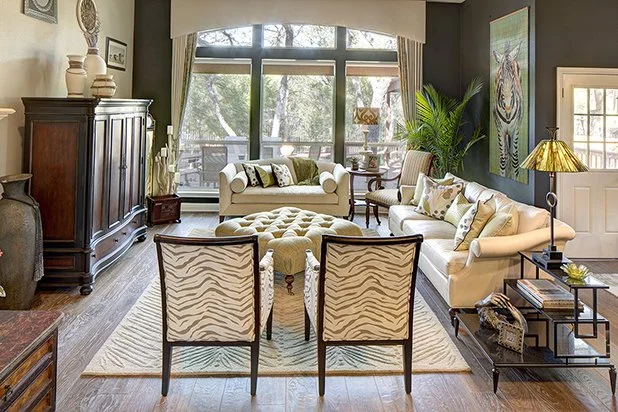
What color palettes complement Hill Country contemporary homes?
When I’m thinking about color for a Texas Hill Country home, the landscape is usually the first place I look. Limestone, dry grasses, agave, live oak and warm earth already create a sophisticated natural palette, and bringing some of those tones indoors can help the house feel connected to its surroundings.
For Hill Country contemporary homes, I tend to favor warmer foundations rather than stark black and white. Creamy off-whites, soft limestone grays and warm bone tones keep contemporary spaces feeling fresh without becoming clinical. From there, muted greens, terracotta and ochre can introduce color, while blackened steel, aged bronze and charcoal provide contrast and definition.
Warm Foundation
Palette: Warm bone, creamy off-whites, and soft limestone gray. These shades establish a warm, neutral foundation throughout the space.
Where to use it: Walls, cabinetry, plaster finishes, and main stone surfaces.
Hill Country Color
Palette: Agave green, dusty sage, soft terracotta, and warm ochre. These earthy tones bring the natural colors of the Hill Country into the interior.
Where to use it: Upholstery, handmade tile, artwork, and accent pieces.
Deeper Contrast
Palette: Blackened steel, aged bronze, and charcoal stone. These deeper tones add contrast, depth, and definition to the overall palette.
Where to use it: Window frames, lighting, hardware, and architectural details.
That doesn’t mean every Texas Hill Country home needs to be beige and green. If you love color, there is absolutely room for it. A patterned chair, an unexpected piece of art or beautifully colored handmade tile can bring personality to a quieter palette.
The larger consideration is how colors relate to one another throughout the house. In an open floor plan, you may be able to see the kitchen, dining room and living room at the same time, so each space needs to feel connected without looking overly matched. A consistent foundation gives you the freedom to have more fun with individual pieces along the way.
Bringing Your Hill Country Home Together
The Texas Hill Country homes I love most find a natural balance between architecture, landscape and everyday life. They can be contemporary without feeling cold, luxurious without being overly precious, and open to the outdoors while still feeling warm and comfortable inside.
Getting there usually comes down to making thoughtful decisions early: understanding how the rooms will relate to one another, choosing materials that suit both the architecture and the way you live, and creating a palette that feels connected to the land without simply copying it.
When I design Texas Hill Country interiors, I’m always thinking about the whole home and how all of those decisions will eventually come together. The stone and flooring matter, but so do the furniture, fabrics, lighting, art and the pieces you already own and love. I want a home to feel collected and personal, with enough polish to feel special and enough ease that you never have to worry too much about living in it.
Because at the end of the day, this is your home. It should look wonderful when everyone arrives for dinner and feel just as good the next morning when it’s only you, a cup of coffee and that view outside the window.
